EvoMix, Synfonos’s old name
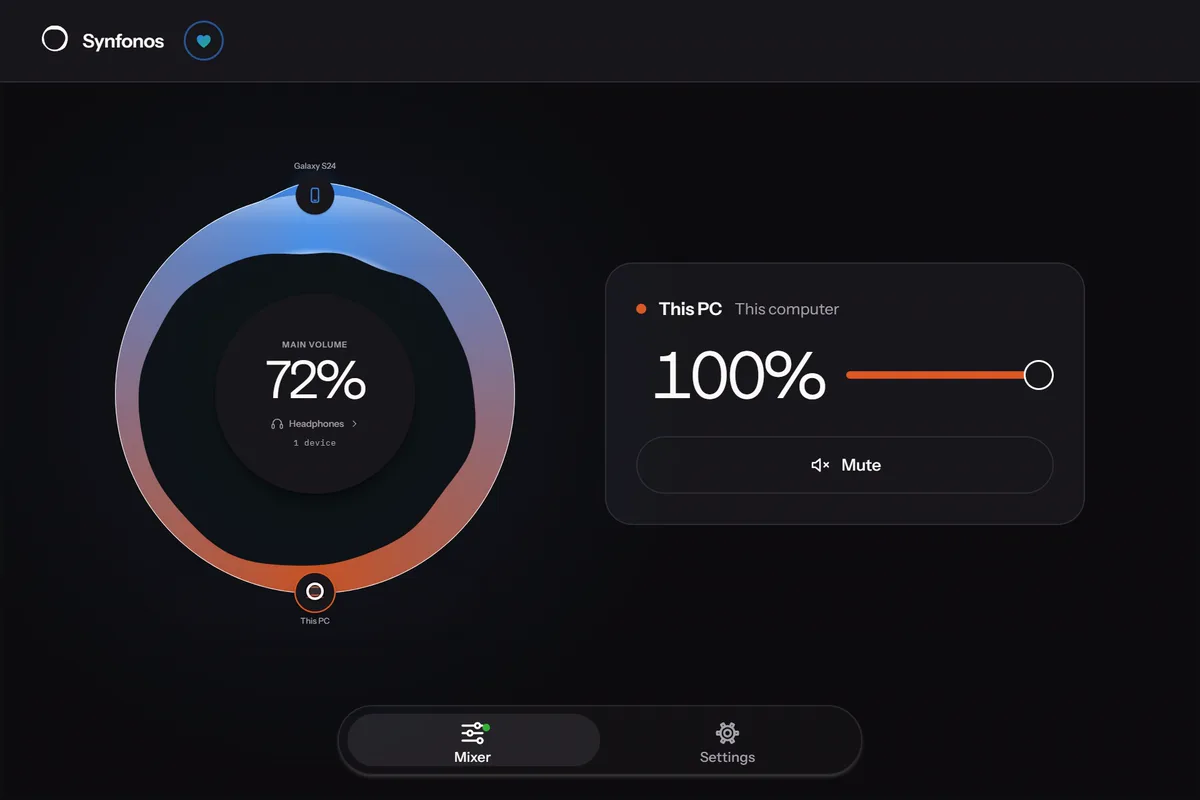
Synfonos, under its working name: the one you just broke. Rust, UDP and Opus.
evrim (noun, Turkish): evolution.
I've been writing software since I was seven. I study Computer Engineering at Bilkent, in Ankara, and these days I direct AI agents instead of typing every line: real-time audio, a YouTube production line, a real-time face and body changer.
This is what I build now.
Audio from several devices, mixed live into one pair of headphones.
Every device sends its sound over the local network in 10 ms packets: a Rust engine, UDP, Opus. One receiver mixes all the streams in real time. When a packet goes missing, a copy riding in the next packets takes its place. Synfonos 1.0 shipped on 25 September 2026.
synfonos.comRun the real app in your browserLaunch film, 41 s
1,298 commits in 44 days and 3,148 Rust tests in 23 crates, counted from the repository on 28 September 2026.
Don't take my word for it.
This is Synfonos's loss recovery, running in your browser. Press play, then drag across the stream to mark packets; let go and they are destroyed. Then switch Synfonos recovery off and listen again.
Drag across the stream to mark packets; let go and they are destroyed.
In Synfonos's own measurement on congested Wi-Fi (5 % loss, 60 ms jitter), one copy per packet still left 7 frames to invent. Two left none.
The network here is simulated. The music is the opening of Bach’s Prelude in C major (BWV 846), played by Kimiko Ishizaka on a concert grand (Open Well-Tempered Clavier, public domain): an unbroken line of notes, so every gap is audible. The recovery rule is Synfonos’s own, with the three copies chosen for Wi-Fi: every packet carries the three frames before it.
Your browser can't run the audio part, so this is the picture without the sound.
Synfonos, under its working name: the one you just broke. Rust, UDP and Opus.
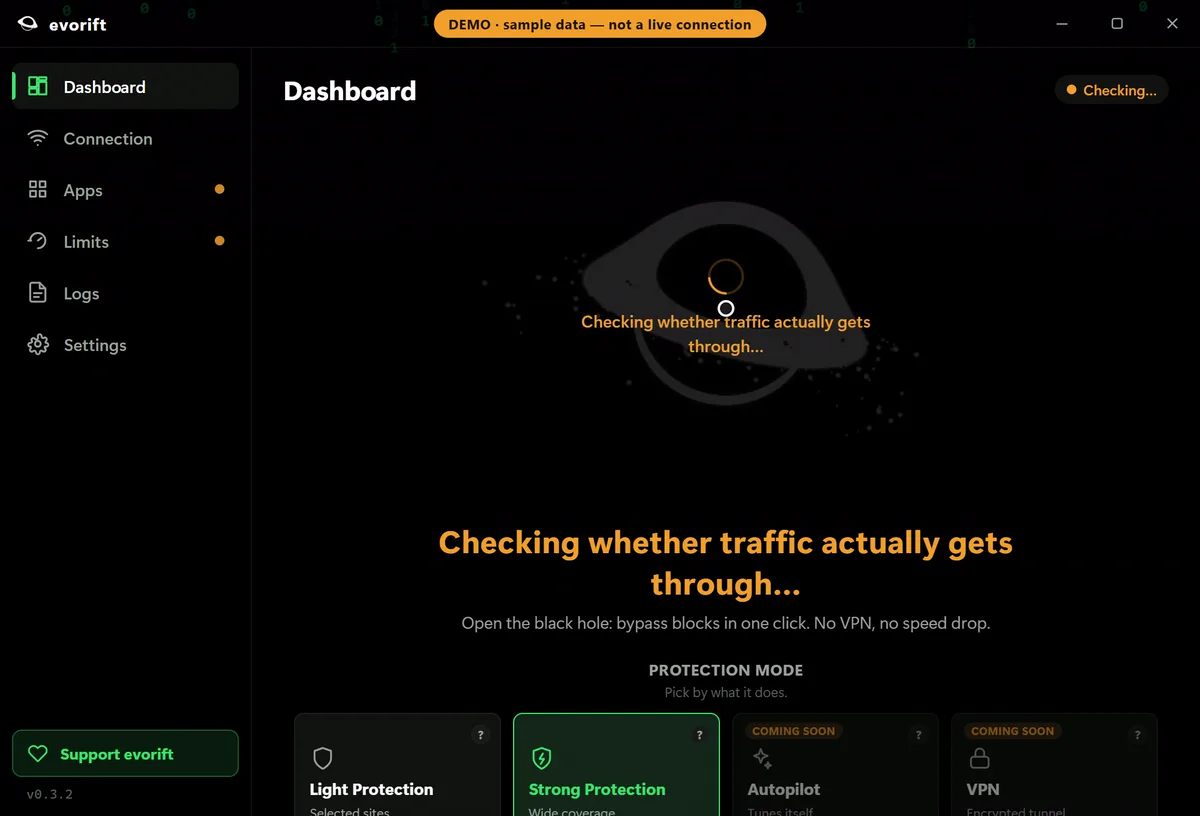
When your network breaks certain connections, evorift repairs them on your own PC. No VPN, no server.
94 commits and 227 Rust tests, counted on 28 September 2026.
Give it a YouTube link or a video and it cuts short-form videos out of it, in six stages: transcript, script, footage, voice and subtitles, an After Effects project, the render. More than 25,000 lines of Python and React.
An eight-agent chain built it:
EvoVideoX is one machine in a longer line: my YouTube software, from an idea to a video that is published, cleared and streamed.
About 266,000 lines of code across the eight repositories of that line, counted on 27 September 2026 (tests included; generated and third-party code left out).
Today it runs the Toon Kids network: 15 channels, more than 2.6 million subscribers.
So far, from the line's own records, 28 September 2026.
Upload YTStudioX 78,379 lines
The largest piece. It takes jobs as folders, drives YouTube Studio through Playwright (never the Data API), fixes in a second pass the metadata the upload wizard gets wrong, schedules, handles the disclosures, and reads every channel’s analytics and revenue each day. FastAPI, SQLite, React and a Chrome extension.
Pick a stage to see what it does.
A real-time face and body changer. MediaPipe Holistic tracks body, hands and face; ZeroMQ carries the pose; TripoSR and TripoSG turn a photo into a 3D model; UniRig rigs it; a C++ and Vulkan renderer draws it. The first prototype took about three hours with agents.
How does one student ship all of this?
Most of my day goes into the engineering itself: I design the architecture, write the plans, test on real machines and real networks, and decide what ships. Agents do the typing, many at once, and every change they make is attacked by a saboteur agent and reviewed before I merge it.
Variation first, then selection.
My first AI, in June 2025, I wrote in Unity from my own head, knowing nothing about how it is usually done: it evolves a polynomial toward a target by random mutation and selection, one candidate a frame. It was very slow. The same week I wrote a training algorithm that taught a network to read handwritten digits (MNIST) in about 1.2 seconds, where standard PyTorch took 55.2 seconds: about 47× faster, by optimising the data path (Ryzen 7 5700X, RTX 3060 Ti, 64 GB of RAM at 3200 MHz). The week after, I worked out the linear algebra and the algorithms AI needs and wrote them in Python by hand.
Since 1 June: 2,128 commits across 12 repositories. Across everything I have built with agents: nearly 4.8 million lines of code generated. Counted on 28 September 2026.

Every task goes through the same loop.
42 agent roles are defined across my repositories. This is the core crew that works in all of them; each has one job.
And the specialists, per project:
Synfonos
The YouTube line
EvoVideoX
Rewind.
I was fifteen.
Before any of this: a VR headset.
At 15, virtual reality for a UNDP project; at 13, for TCDD; before that, six months of VR research; at 12, AR for an animation studio. All of it built with Unity, C# and C++. One of these I have a recording of, and it plays here. The other three are still lost, so they arrive the way a lost packet does: rebuilt from what survived.
It showed the mercury and the other harmful substances inside a home.
It taught TCDD’s new employees how to inspect the rails.
All of this VR was built on the Oculus Quest 2.
Point an iPad at a printed page and it comes alive: the page plays a showreel, a ship and a tank stand up on it with their numbers, a house lights up for the night, a cartoon character lands on it.
The one that came back, at full resolution.
Rewind.
I was ten.
Before the headset: Unity and C#.
Players join over TCP; after that, everything that moves travels over UDP, 30 times a second. The players only send their keys and where they aim. The server moves everyone, decides every hit and runs the enemies. Up to 32 players.
About 2,100 lines of network code, client and server.
Years later, Synfonos splits the same way: a TCP connection for control, UDP for the audio.
Rewind.
I was seven.
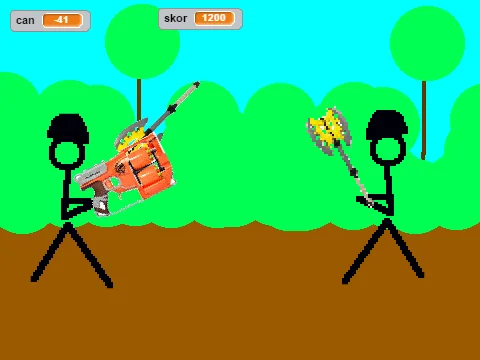
I made these in Scratch when I was 7.
They are simple, and not very good. Two of them still run: press Play.
 |  |
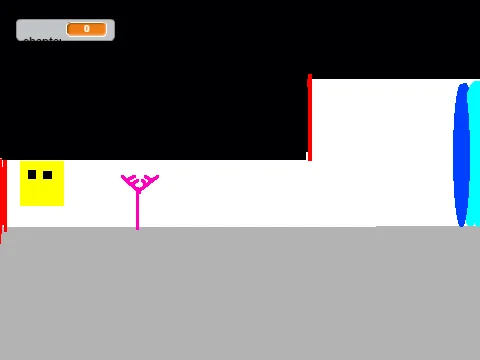 |  |
(Rebuilt in the browser’s default style. The games are the originals, without their sound.)
Back to now.